
Step-by-step guide to using a clicker to change emotions and therefore behaviour
By Sally Bradbury
Click the trigger is a simple and effective method for changing your dog’s emotional response to a trigger.
Whether your dog reacts to something out of fear, over arousal or excitement this method can be adapted to most scenarios to change your dog’s reactivity by changing the emotions that are responsible for his response.
You can use ‘click the trigger if your dog reacts to dogs, people, cars, visitors, people, anything passing the window, noises in the house or outside, the dog barking next door, cars pulling up outside, somebody knocking on the door, ringing the doorbell, your telephone ringing, other animals such as cats, birds, horses, sheep et al..
THRESHOLDS
First determine your dog’s threshold. This is the point where he is likely to react. Always work with your dog below his threshold. This means he will be aware of the trigger but is less likely to react and if he does, will be easily interrupted and still take food and engage with you.
His threshold will be determined not just by distance from the trigger but by many other variables. It could be the activity level of another dog. He might be fine with a little ploddy old dog at 20 yards but go crazy at a dog that is jumping and barking or chasing a ball at 50 yards. Trigger stacking will play a part, If he’s having a bad day then his ability to cope and his threshold will decrease. Other things such as the weather for example, especially if it’s traffic you are working on as wet roads are vastly different from dry ones. If it’s a moving trigger you are working with then the trigger must not be coming towards you or you going towards it. That would immediately put your dog over threshold. Find somewhere where you can observe the trigger going across your view in the distance.

THE CLICKER
It’s very easy to teach your dog to be clicker savvy. You just simply click and treat a few times over a few short sessions. Click first then fetch the treat from your pocket or container. If you don’t want to use a physical clicker then you can use a marker word such as “YES!” As long as you try and keep it unique for training purposes.

OUTSIDE, MOVING TRIGGERS, traffic, people, dogs, horses et al
Now that you have a clicker savvy dog and you have found somewhere to watch the triggers and keep your dog under his threshold you are ready to start.
Lets use traffic as the first example but also could be people or dogs out and about. The ideal training spot would be on a footpath or a very quiet road that leads to a minor road at a T-Junction, or a quiet corner of a supermarket car park. The traffic needs to be going across your view from left to right or right to left, not coming towards you. Ideally, it should be just one vehicle at a time, with at least a few seconds between them but preferably more.
Stage 1: Watch his body language; you are looking for the slightest ear prick. When he notices a car, you are going to click. If you have put in the groundwork with the clicker, if he knows there are treats on offer, and if you are far enough away from the traffic, then he will turn back to you for the treat. Step back if that makes it easier for him to turn to you, and then step forward for the next one. Repeat, repeat, repeat. He notices the car, you click, he gets a treat. There is no need to say anything at all but a quiet ‘good boy’ is fine. We are aiming for it to be a default behaviour, something he chooses to do, not something he is being asked to do or not to do.
Stage Two: At some point you are going to be slow with the click and he is going to see a car, turn back to you and say, ‘Oi! You forgot to click’. Click and treat that. Now you know he has got it and we can move to stage two. See a car, turn back to you, and get a click and a treat.
Now you can choose different locations, decrease the distance, add in some walking parallel to the traffic. With each new criteria start again at stage one and you will quickly progress to stage 2.
It’s always a good idea to enlist some volunteers to help you as well so that you can be in control of the triggers, especially if the trigger is people or dogs. The volunteer can walk past slowly, skip past, run past, ride a bike etc.
PREVENTION
Meanwhile you need to make sure that you’re not setting your dog up to fail and undoing any of your good work so carefully consider where you walk your dog. Go in the car if you can to places where you can avoid encounters that your dog isn’t ready to cope with yet.
If you are working on your dog barking at the neighbours then liaise with them. If they are willing, arrange it so that your dog doesn’t go out in the garden when they are there. If the neighbours are not wanting to cooperate, maybe in the middle of summer when they’re out there all day then you would just take him out on the lead away from the boundary fence for his toilet needs or even consider the front garden.
Other examples of using click the trigger.
BARKING AT THE TV
Every other advert seems to have a dog or animal in it these days so this seems to be a common problem.
Sit with your dog on lead as far away from the TV as you can get, even if it means moving it to opposite a doorway and being out of the room. Turn the volume down to zero and use a recorded programme so that you know when to expect to see the animals.
You are going to need him to want to eat so have something really delicious and smelly like cooked liver or hot dog sausage. If he is below threshold then he should eat the treats.
Give him one or two before turning the TV on to check. Then as soon as he sees an animal on the TV click and treat. If he won’t take his eyes from the screen hit the pause button and see what happens. Your aim is for him to see something on the TV he would normally bark at but instead to turn to you for his reward for looking but not barking.
You’ll need to experiment a bit. If you click and he still barks he still gets the treat. A click is always a promise of a reward. Once you can sit far away from the TV and he can see an animal and immediately turn to you and say ‘I looked at it and didn’t bark. Treat please’ then you gradually, very gradually up the ante. Add some volume, move closer and anytime it goes wrong go back two stages and get it perfect there again.
Meanwhile you must avoid all instances of letting him practice the behaviour you are trying to eliminate otherwise it will take a long time to make any progress. You may have to make sacrifices and read instead of watching TV or watch when he isn’t in the room.”

BARKING AT BIRDS/SQUIRRELS
Sit with your dog on a lead in the garden OR indoors near the open outside door where you can see birds passing but where he will still be responsive to you with clicker and treats.
Have your clicker and a pot of tasty treats on hand and wait. As soon as his body language indicates that he has seen something you have a nano second before he barks to click so that he turns to you for the treat. Repeat, repeat, repeat.
If you click and he still barks it doesn’t matter, he still gets the treat just be careful not to click the barking but click before he does and he should prefer to eat a treat than to bark.
If he is unresponsive to clicker and treat then you are too close to the trigger or the treats are naff. Move further away. Get better treats.
At some point he will see something, you will be slow to click and he will turn to you and say “Oi, you forgot to click!” Click that and jackpot reward for him.
Now you have stage 2. See bird, tell you he saw it, click treat. You will have to do this as often as you can and gradually up the ante. Closer to outside, off lead eventually and further away from you so he has to return for his treat. Once he’s got it the reward can be a game with a toy, or occasionally just a smile and a ‘good boy’.
You should soon find that he will be willing to ignore birds and play training games with you instead……

BARKING AT THE FENCE (Neighbour’s dogs)
Prevention first, Take the dog out on lead, liaise with neighbours and have a rota for letting dogs out if possible. Put up a secondary fence just inside the current one and plant shrubs in between.
To teach the dog a different response go out into the garden with her on lead, when you know the dog next door is in their garden.
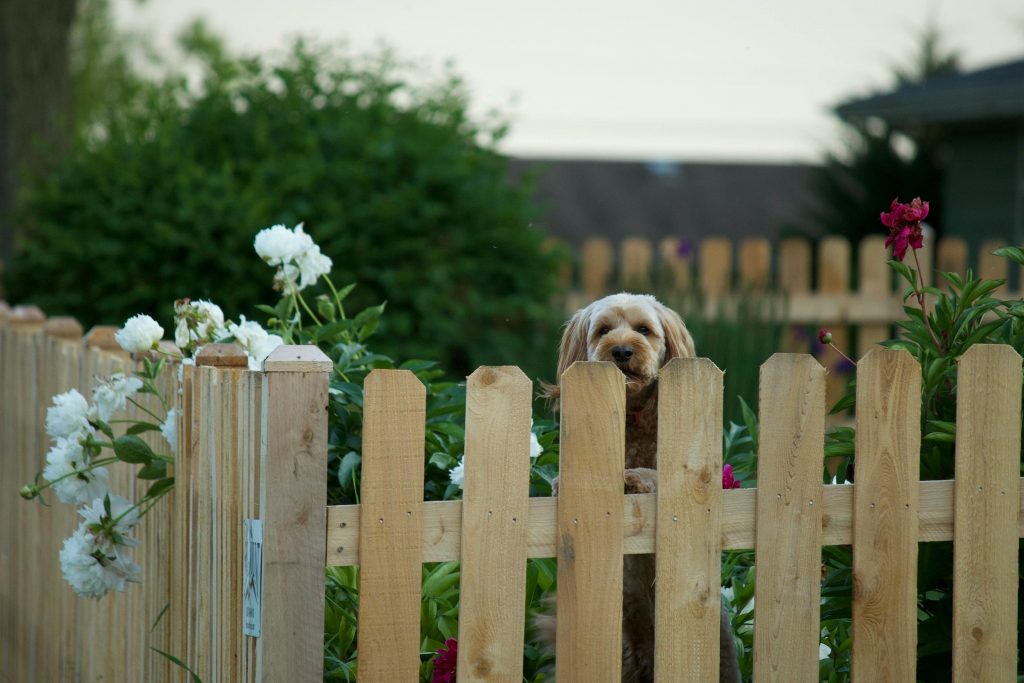
Have your clicker and a pot of tasty treats, stay back from the fence line and wait for her to hear the dog next next door. As soon as her body language indicates that she has heard something you have a nano second before she barks to click so that she turns to you for the treat. Repeat, repeat, repeat. If you click and she still barks it doesn’t matter, she still gets the treat just be careful not to click the barking but click before she does and she should prefer to eat a treat than to bark. If she is unresponsive to clicker and treat then you are too close to the trigger. Move further away. As above move to stage 2 when the dog is ready.